
APPLIANCE REPAIR TIPS
Ice Maker Not Making Ice? Separate Production, Water, and Dispenser Problems
By Alan Appliance Repair · October 8, 2026 · 5-minute read
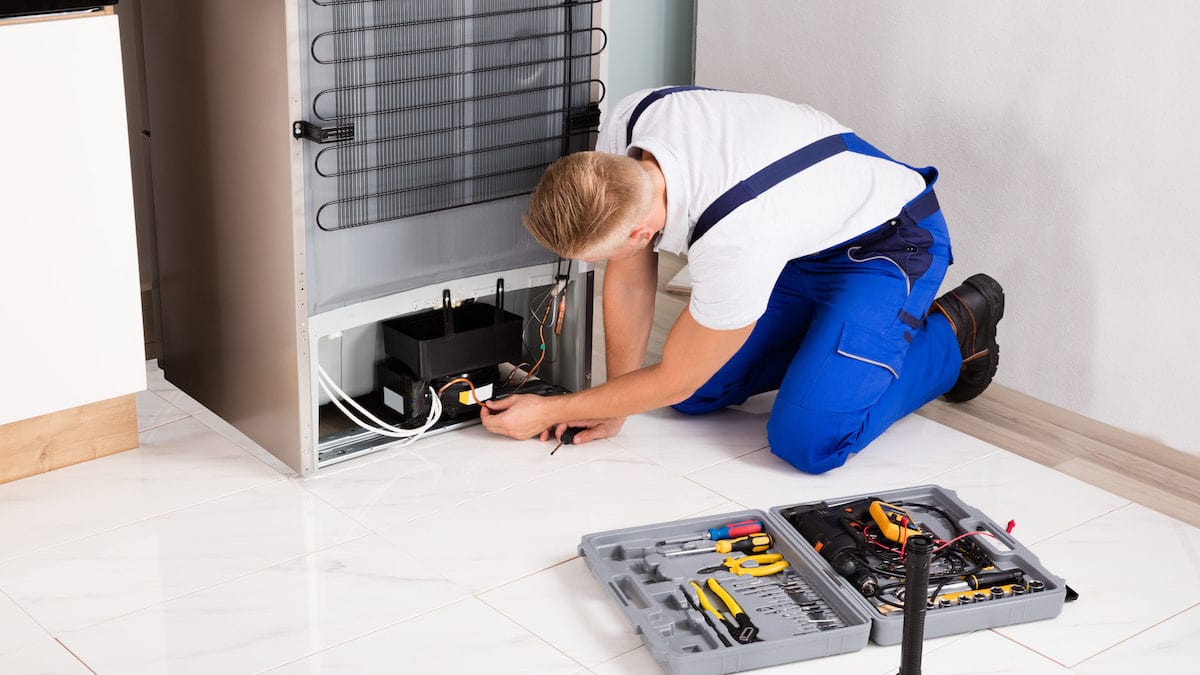
An ice maker that stops producing can disrupt an otherwise working kitchen. The most useful first question is simple: is the refrigerator failing to make ice, or is finished ice failing to reach your glass? Those are different complaints, and telling them apart helps avoid an unnecessary parts decision.
This guide covers refrigerator ice makers. A separate undercounter ice machine has a different refrigeration, water and drainage arrangement. Use the instructions for your appliance’s full model number, and leave internal testing to a technician.
Look in the storage bin first
If your model allows ordinary access to the bin, look without putting fingers near moving mechanisms. Is it empty, partly full, or holding a solid mass of cubes? Note what you find before changing settings. A full bin with no ice at the dispenser points toward a delivery problem; an empty bin calls for a production check.
Whirlpool’s dispenser guidance starts by distinguishing these situations. Check the model’s dispenser-lock instructions and whether the door is fully closed. Do not push a utensil into the chute or force a frozen mechanism. A jam needs a different response from a water-supply fault.
Confirm the ice maker is actually enabled
The refrigerator can keep food cold while its ice-making function is switched off. Look for the correct control in the owner’s manual; it may be on the display or the ice maker. A control marked Ice Off is different from a temperature setting. Do not move an unfamiliar wire arm by force.
GE Appliances’ ice-production guide also explains that the ice maker needs suitable operating temperatures. Record the freezer’s measured temperature with an appliance thermometer as well as its selected setting. A display may show a target rather than the actual temperature. Avoid repeatedly selecting colder settings while trying to judge the result.
Write down what changed
A short history is often more valuable than a reset. Did the problem follow a filter replacement, plumbing work, a power interruption, moving the refrigerator, or unusually heavy ice use? Was the bin producing normal cubes yesterday, or has output declined gradually for weeks?
Use a note with four entries: when normal production was last observed, any recent changes, whether the water dispenser works if fitted, and whether food temperatures have changed. Photographs of the controls and rating label help distinguish a setting from an error message. Keep the complete wording of a warning rather than paraphrasing it as “a red light.”
Consider the water path without disconnecting it
Ice production depends on an appropriate water supply. Whirlpool identifies restricted supply, filter issues and installation changes as relevant checks. A slow dispenser, small cubes or declining output are useful observations; none proves which component is faulty.
Check the filter’s model and installation date against the manual. Report whether the trouble began immediately after changing it. Do not substitute a similar-looking cartridge, bypass the filter with an improvised fitting, or disconnect tubing to test flow. Tell the technician if the home uses reverse osmosis or another treatment system so the supply can be assessed correctly.
Use the right drawing
A manufacturer’s illustration can help you identify the ice bin, filter or control location. Start with the model number, then find its use-and-care manual. For Viking equipment, the official documentation library includes current and discontinued products. Select your actual model rather than treating a drawing of another refrigerator as an instruction.
A numbered diagram identifies an item; it does not demonstrate that the item has failed. Keep any part-number discussion separate from diagnosis. If a document opens at the wrong page, use its contents or search for “ice maker,” “water filter” or “controls.” Avoid unofficial download pages asking for payment or browser extensions just to view a manual.
When the issue needs service
Arrange assessment when production remains absent after the applicable owner checks, recurring ice buildup blocks normal operation, or the problem began after installation. Stop the affected function for an active water leak. Burning odors, damaged wiring or repeated breaker trips call for prompt professional attention, not repeated restarts.
If food is warming too, give that priority over ice. Move vulnerable food to reliable cold storage and use the FoodSafety.gov time-and-temperature guidance to assess it. Do not taste food to decide whether it is safe.
Make the service request specific
“The bin is empty, the freezer temperature has risen, and the problem started after an outage” is more useful than “the ice maker is broken.” You do not need to pull the refrigerator out or remove its cover before an appointment. Mention a built-in installation, custom panels and any restricted access.
See our refrigerator repair service and service areas, then request an appointment or call (224) 347-6861. Service requests are accepted 24/7. Technician visits are by appointment and subject to availability; overnight visits are not guaranteed.
