
Alan Appliance Repair · Refrigeration service
Sub-Zero Appliance Repair
Request service for a Sub-Zero refrigerator, freezer or ice maker in Chicago and nearby suburbs. Alan Appliance Repair assesses cooling changes, leaks, operating noises and control problems before explaining the repair options for your equipment.
Requests accepted 24/7. Technician visits are by appointment and subject to availability.
Choose the refrigeration problem
Cooling changes
Tell us which compartment has changed, whether the appliance runs continuously and any readings already available.
Ice maker & water issues
Describe slow or stopped ice production, a dispenser issue or a visible leak separately from cooling performance.
Noise, frost & controls
Include unusual operating sounds, excess frost, a displayed message or controls that no longer respond normally.
Local Sub-Zero repair guides
For other locations, check the service area or contact us with your full address.
Plan service for a built-in appliance
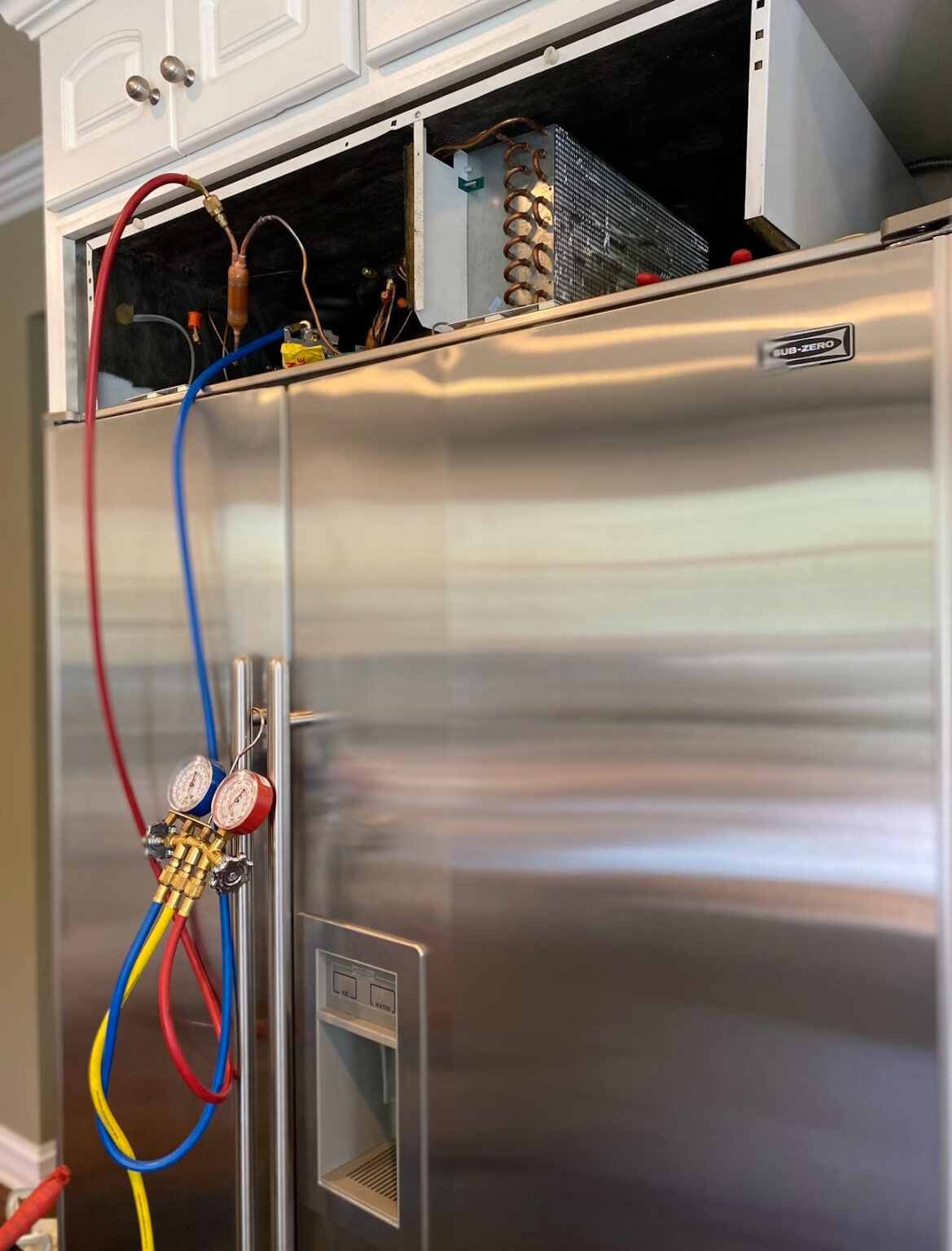
Describe the installation as well as the fault. Separate refrigerator and freezer columns can have different model numbers even when they share matching panels. For a wine storage unit or another configuration, send the exact model so we can confirm the equipment type.
Leave installed equipment in place. Share a photo of the visible installation if helpful, and tell us about cabinetry, stairs, parking or building entry requirements.
Practical checks and service preparation
Start with the refrigeration configuration
Identify a refrigerator/freezer combination, independent refrigerator or freezer column, wine cabinet, undercounter appliance or separate ice-making product. The model label determines the relevant operating instructions and parts information. A kitchen photograph helps describe the installation, but appearance and approximate age do not replace the complete model number.
When several units share matching panels, describe each one separately. Include which compartment is warm, where moisture appears and whether the display or lighting changed. An ice-production complaint should also state whether the freezer still maintains normal storage conditions. This separates the initial service question from assumptions about which component has failed.
Choose the useful observation for the problem
For temperature trouble, record selected settings and any actual readings with their times. For water, photograph the visible location and note when it appears. For noise, describe timing and whether cooling changed. For an alarm, copy the exact message. Keep observations brief and use information already available from normal operation rather than repeatedly restarting faulty equipment.
Protect food independently of the appointment. Keep doors closed as much as practical and arrange reliable cold storage when cooling is uncertain. Use official food-specific time-and-temperature guidance to decide what can be kept. A display setpoint, a cool-feeling container or a technician booking cannot establish that perishable food has stayed safe.
Know the boundary between owner care and service
Use the exact owner’s guide for permitted cleaning of accessible seals, shelves or condenser areas. Access differs between product series. Do not apply an older unit’s grille-removal instructions to a different installation, spray chemicals into machinery or chip ice from concealed surfaces. If access is unclear, leave the appliance assembled and ask about the appropriate procedure.
A diagnostic visit should connect the observed symptom to specific findings and explain the proposed work. Ask which appliance and compartment the estimate covers, which parts are proposed and what written coverage applies. Existing manufacturer or extended-plan terms should be checked before authorizing service. A brand service request does not itself establish coverage through the manufacturer’s service network.
More questions about these symptoms
What information helps distinguish repair from replacement?
Start with the diagnosis, the proposed work and parts availability for the actual model. Also consider installation constraints and the scope of any existing coverage. Do not decide from one sound or one temperature reading alone. Ask what the findings establish and what remains uncertain before comparing options.
Can I book when the label is difficult to reach?
Yes, explain the equipment type and send photographs of safely visible areas when requesting service. Leave built-in equipment in place. Model identification and service scope can be clarified without asking you to pull a heavy connected appliance out of its cabinetry.
Manufacturer and safety references
Use the instructions for your exact model. Requests are accepted 24/7; technician visits are by appointment and subject to availability. Overnight visits are not guaranteed.
What happens after you request service?
- We review the request. Include the model, symptoms, service address and a contact number.
- The visit is confirmed. We discuss scheduling and access. Ask about the diagnostic visit and service call with repair offer when booking.
- Repair options are explained. The assessment determines the proposed work. Discuss pricing, parts availability and the written coverage that applies before approving repairs.
Sub-Zero service questions
Does a cooling problem always mean a compressor failure?
No. Several components and operating conditions can affect temperatures. The appliance needs assessment before a particular repair is recommended.
What if I have a refrigerator and freezer column?
Provide a separate model and symptom description for each affected unit. Matching kitchen panels do not necessarily mean the units share the same components or fault.
How do I check parts and warranty arrangements?
Ask which parts are proposed and what written coverage applies to the completed repair. If the appliance has existing manufacturer coverage, check its terms before authorizing service.
Request Sub-Zero repair
Tell us what changed and which appliance needs attention. We will confirm the service address and appointment details with you.
