
APPLIANCE REPAIR TIPS
Refrigerator Leaking Water? Find the Pattern Before Requesting Repair
By Alan Appliance Repair · September 28, 2026 · 5-minute read
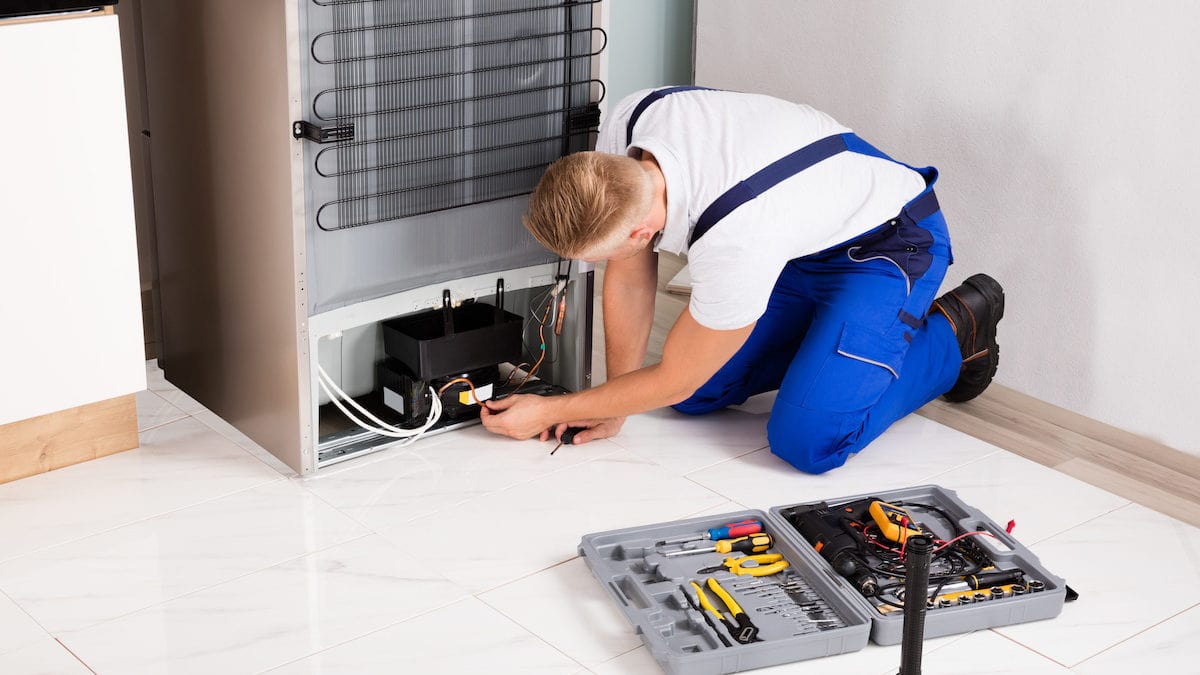
A refrigerator leaking water can mean a small spill at the dispenser, water collecting inside a compartment, or an active leak onto the kitchen floor. Before ordering a part, find out where the water appears and when it returns. The location of a puddle is a clue, but water can travel underneath an appliance before you see it.
This guide covers observations you can make without removing panels or moving a heavy refrigerator. Use the owner’s manual for your exact model, especially for water-filter installation and any maintenance involving the water supply.
First, make the area safe
Keep people away from a slippery floor. If water is near the plug, outlet, wiring, or another electrical appliance, do not step into it or reach through it to unplug the refrigerator. Seek qualified help to isolate the power safely.
For an active supply leak, close the refrigerator’s water shutoff only if you know which valve it is and can reach it safely without moving the appliance. If the source or valve is uncertain, contact an appliance service professional or plumber as appropriate. Do not force a stiff valve or disconnect pressurized tubing. Clean up accessible water only when the area is safe.
Only a few drops after dispensing?
A small amount of water immediately after dispensing does not necessarily mean an internal leak. GE explains that a few dispenser drips can occur because of pressure or temperature changes. Water left in the drip tray also needs to be wiped away.
Compare that limited pattern with water that keeps flowing, reappears without dispenser use, or reaches the floor. Record whether the leak happens after a glass of water, after ice is dispensed, or at unrelated times. Do not repeatedly operate the dispenser to reproduce an active leak.
Did it start after a filter change?
Have the old and new filter model numbers available, and note exactly when the replacement was fitted. Check the refrigerator manual’s compatibility and installation instructions. An incorrectly installed filter is one possible cause of dispenser leakage, according to Whirlpool’s refrigerator-leak guide.
If the filter is homeowner-accessible and the manual permits inspection, follow its procedure, including any required water shutoff. Never force the filter, improvise seals, or keep tightening a housing that leaks. Tell the technician if moisture is visible around the filter location. A leak after replacement does not, by itself, prove the new cartridge is defective.
Water inside a drawer or ice on the compartment floor?
First rule out an obvious spilled container without taking the interior apart. Notice whether water returns beneath the same drawer, whether ice repeatedly forms in the same place, and whether the refrigerator still cools normally. Photograph the condition before wiping up an accessible spill.
A blocked defrost drain is one possible explanation for recurring internal water. Whirlpool recommends professional inspection when water builds up inside or beneath the appliance. Do not use a sharp object to chip ice, push wire into an unseen drain, or apply a hair dryer inside the refrigerator. The location and access procedure vary by design.
Water at the back or after a recent move?
Describe any recent installation, cabinet work, filter replacement, or movement of the refrigerator. Do not pull a built-in unit out just to look behind it. If tubing is already visible from a safe position, a photograph of that area can be useful; leave fittings and electrical covers untouched.
Water supply problems can also affect ice-making. Whirlpool’s ice-maker leak guidance discusses supply-line and filter issues among the possibilities. Mention whether ice production changed at the same time as the leak. A floor puddle alone cannot establish that the ice maker needs replacement.
Keep track of food temperature
A water leak and a cooling failure are separate symptoms, so check both. FoodSafety.gov recommends a refrigerator temperature of 40°F or below and using an appliance thermometer. If cooling is affected or the refrigerator must be disconnected, move perishable food to safe refrigeration or a properly iced cooler and follow official food-safety guidance.
Do not use smell or appearance to decide whether food is safe. For cooling symptoms, our refrigerator-not-cooling guide covers the next checks without mixing them up with leak diagnosis.
Send a clear description when requesting repair
- Brand and model number, plus whether the refrigerator is built-in.
- Where water first appears and how often it returns.
- Whether the dispenser, ice maker, or a filter change seems related.
- Photographs of the puddle and any accessible wet area.
- Current refrigerator temperature and any displayed message.
- Whether the water supply has been shut off and whether floor or cabinet damage is visible.
Alan Appliance Repair offers refrigerator repair, including GE refrigerator service. Check our service area and request an appointment, or call (224) 347-6861.
Service requests are accepted 24/7. Technician visits are by appointment and subject to availability; overnight visits are not guaranteed.
