
Refrigerator Not Cooling? What to Check Before Calling for Repair
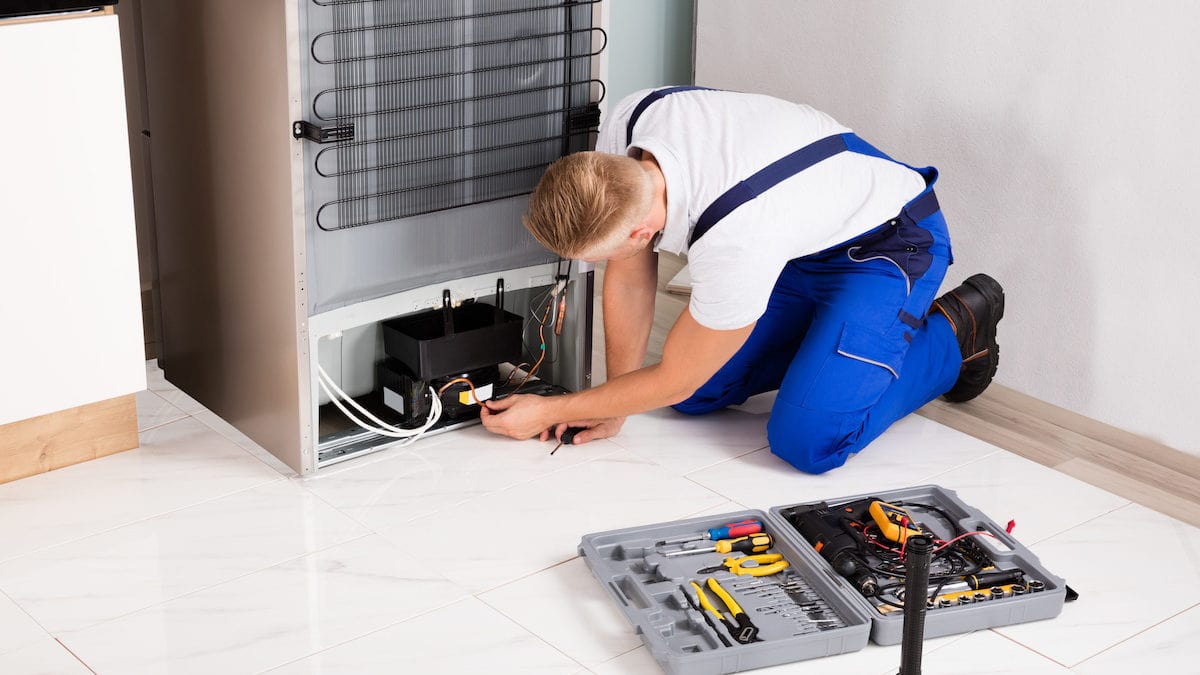
You open the refrigerator and notice that the milk feels warmer than usual. The light still works, and you may even hear the appliance running. Does that mean the compressor has failed? Not necessarily. A refrigerator can lose cooling performance for several reasons, and the symptom alone cannot identify the failed part.
Start by protecting your food. Then work through the checks below without removing service panels or disturbing electrical components. These steps can help you describe the problem clearly when arranging refrigerator repair.
Protect your food before troubleshooting
Use an appliance thermometer to check the actual temperature. A control panel may show the temperature you selected rather than the temperature inside the compartment.
Keep refrigerated food at 40°F (4°C) or below and the freezer at 0°F (-18°C) or below. Move perishables to a working refrigerator or an ice-filled cooler that can maintain a safe temperature while you investigate. Keep doors closed as much as possible.
Perishable foods such as meat, milk, eggs, and leftovers should be discarded if they have been above 40°F for two hours or longer, or one hour when temperatures are above 90°F. Do not taste food to decide whether it is safe. See the FoodSafety.gov guidance on refrigeration during an emergency.
1. Check the controls and recent changes
Look at the refrigerator and freezer settings. A control may have been bumped while loading groceries. Some models also have a cooling-off or showroom mode; use your model’s manual to identify it rather than trying an online button sequence for a different refrigerator.
Consider what happened before the temperature changed. Was the appliance recently installed? Was there a power interruption, a large grocery delivery, or a door left open? These details matter because cooling does not recover instantly. Whirlpool’s troubleshooting guide explains that a newly installed refrigerator can need 24 hours to cool fully.
That recovery time is not permission to leave perishable food warm. Keep food safely stored elsewhere, and arrange service if the temperature is rising or the appliance is not recovering.
2. Make room around the interior vents
Check for cartons, produce bags, or containers pressed against the air vents. Rearrange them so air can circulate, and make sure drawers and shelves are properly seated.
On refrigerators that move cold air between compartments, blocked vents can affect temperature distribution. The locations vary by model, so consult the manual. Avoid packing groceries tightly against the back wall. Whirlpool Product Help describes how blocked vents restrict cooling airflow.
If the freezer seems cold while the refrigerator is warm, record the measured temperature in both compartments. That pattern is useful information for a technician; it does not, by itself, prove which component needs replacing.
3. Check whether the doors close and seal
A tall bottle, protruding drawer, or misplaced package can prevent a door from closing completely. Inspect the entire door opening before assuming the gasket needs replacement.
Look for food residue, tears, or visibly distorted sections of the seal. Wipe a dirty gasket gently using the cleaning method in the owner’s manual. If the seal remains loose or the door does not sit correctly, have it assessed. Whirlpool lists dirty or damaged gaskets among possible causes of poor cooling.
4. Check the installation and accessible maintenance points
Keep the base grille and required ventilation clearances unobstructed. Follow the model’s installation requirements rather than applying a universal gap measurement.
Condenser maintenance also varies. Some models have accessible coils; others do not require routine homeowner cleaning. If the manual provides a cleaning procedure, disconnect power first and follow it. Do not remove service panels or pull a built-in refrigerator out of its enclosure to reach components.
For a refrigerator in a garage, check the approved ambient temperature range in its manual. Chicago-area seasonal temperature changes make that specification particularly relevant. A refrigerator intended for indoor conditions may not perform properly in an unconditioned garage. Whirlpool’s product guidance addresses location and condenser care.
When professional refrigerator repair makes sense
Arrange diagnosis if the basic checks do not explain the problem, temperatures remain unsafe, or cooling repeatedly stops. Internal fans, controls, starting components, and refrigeration-system faults require different tests. A running light or an unfamiliar sound is not enough to select a replacement part.
Before the visit, collect the model number, approximate appliance age, thermometer readings, any error code, and a short description of when the problem began. Mention whether one or both compartments are affected. Avoid repeated resets that erase useful information before you have recorded it.
Refrigerator repair in Chicago and nearby suburbs
Alan Appliance Repair provides refrigerator repair in the Chicago area. Check our service area for your location, then request an appointment or call (224) 347-6861. Share the symptoms and temperature readings so we can understand what needs attention.
